
The Cost of Waiting Another Season
Skip a storm inspection this fall and the bill usually doesn't show up until the worst possible moment: a line of thunderstorms rolls through overnight, wind gets under a weak or damaged door, and by morning you're looking at a bent track, a caved-in panel, water pooled across the garage floor, and possibly damage to whatever was parked inside. A full door replacement, soaked drywall, and a ruined vehicle interior cost far more than the hour it takes to check your hardware now. Fall is when south-central Texas sees its sharpest swings — fast-moving fronts, high wind, and the hail that often rides in with them — which makes this the exact window to get ahead of it.
Why the Garage Door Is Your Home's Weakest Wall
Every other wall in your house is a continuous, braced surface. Your garage door is a single large panel, usually the biggest opening in the entire structure, held in place by springs, tracks, rollers, and a handful of hinges. When straight-line wind hits a house, that door takes the brunt of the pressure. If it flexes, buckles, or blows in, the sudden pressure change inside the garage can push upward on the roof structure itself — which is why engineers and insurers treat garage doors as a structural weak point, not just an appliance.
Older doors, doors with worn rollers, or doors that have already taken a hit from hail or flying debris are the most likely to fail under wind load. The good news is that most of the vulnerabilities are easy to spot and fix before a storm, not after one.
Pre-Storm Checklist: Hardware and Structure
- Tracks and rollers: Look for bent sections, gaps where the roller has pulled away from the track, or rust buildup. A door that isn't riding straight in its track has far less resistance to side-loading from wind gusts.
- Hinges and bolts: Check that all hinge bolts are tight and that hinges themselves aren't cracked. Loose hardware is one of the most common reasons a door fails under pressure it would otherwise handle fine.
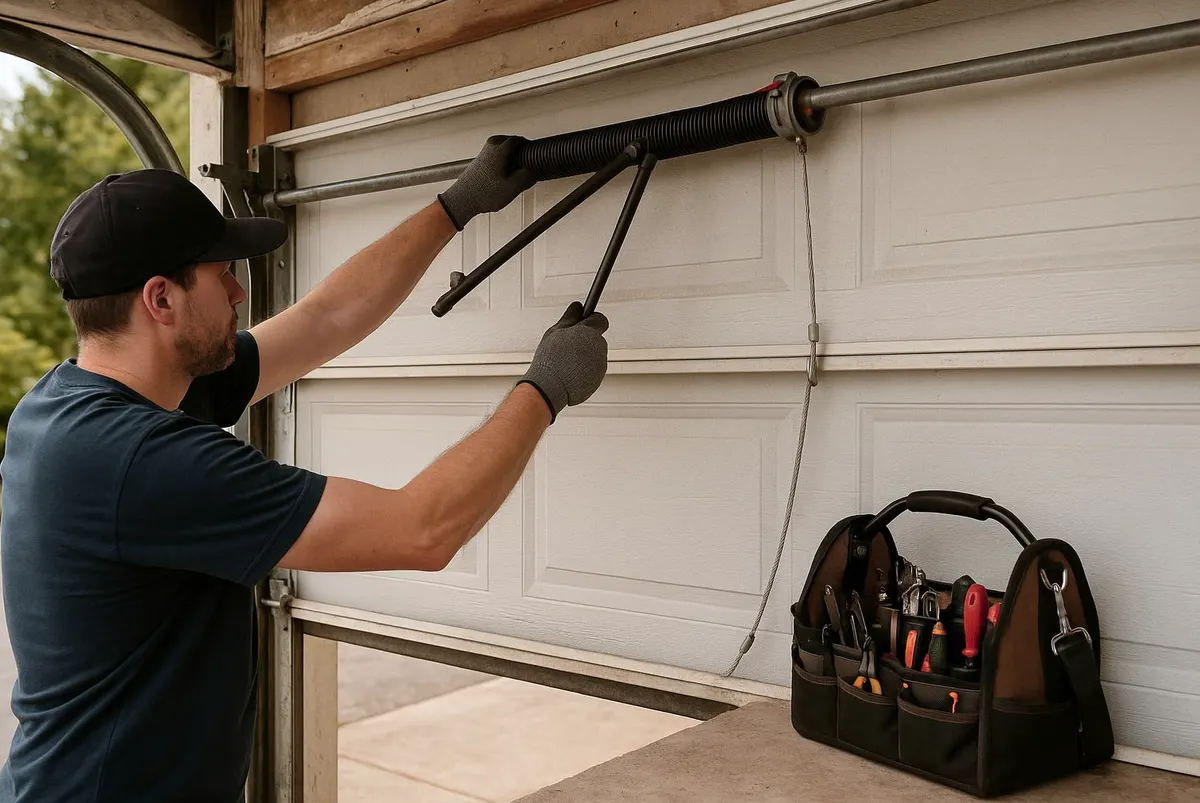
- Springs: Rust, visible gaps in the coil, or a door that feels noticeably heavier when opened by hand are signs a spring is near the end of its life. A spring that fails during a wind event can leave the door unsupported right when you need it most.
- Panels: Run your hand along each panel looking for dents or soft spots from dust abrasion or old hail strikes. Weakened panels buckle more easily under wind pressure even if they look fine from a distance.
- Weatherstripping and bottom seal: Cracked or brittle seals let wind-driven rain push past the door edge. Replacing the bottom seal is inexpensive compared to the water damage it prevents.
Bracing for High Wind
If your door doesn't already have horizontal or vertical reinforcement struts, this is worth adding before storm season rather than after a door failure. Reinforcement kits brace the panels against the kind of lateral flex that causes buckling in sustained high wind. It's a straightforward upgrade and far cheaper than a full door replacement.
Dust, Hail, and the Opener System
Long dry stretches followed by sudden storms mean dust accumulates on sensors and tracks right before the weather that will actually test them. A few things worth doing before the first big front comes through:
- Wipe down the photo-eye sensors at the base of the track — dust buildup is a common cause of a door that won't close, which is the last thing you want with a storm bearing down.
- Lubricate rollers, hinges, and the track itself. Dust mixed with old lubricant turns into grit that accelerates wear.
- Test your opener's manual release and, if you have one, battery backup. Power outages are common during severe storms, and a backup battery lets you still open and close the door safely when the grid goes down.
- After any hailstorm, inspect panels and the opener's exterior sensor housing for cracks even if nothing looks obviously broken — small impact damage can weaken a panel's resistance to the next wind event without being visible at a glance.
A Simple Fall Maintenance Routine
- Visually inspect tracks, rollers, hinges, and springs once a month during storm-prone stretches.
- Tighten any loose hardware immediately rather than waiting for a scheduled check.
- Lubricate moving parts every few months, more often if dust is heavy.
- Replace worn weatherstripping before it cracks fully through.
- Keep the opener's manual release accessible in case of a power outage during a storm.
When to Call Somerset Garage Door
If you notice rust on the springs, a door that's hard to lift, visible track misalignment, or panel damage from a recent storm, don't wait for it to get worse. Our Garage Door Maintenance service covers a full hardware inspection, lubrication, and adjustment so your door is ready before the next front rolls through. If a storm has already done damage — a bent track, a sprung-open panel, a broken spring overnight — our Emergency Garage Door Service gets a technician out to secure the door and get it operating safely again without a long wait.
Whether you're in Somerset, Von Ormy, Lytle, Atascosa, Pleasanton, Poteet, Natalia, or San Antonio, our technicians know the kind of wind, hail, and dust this area deals with and inspect doors with that in mind. Call Somerset Garage Door today to schedule a pre-storm inspection and keep your garage door from becoming the weak point in your home this season.